

By Suryaning Bawono
The Shifting Foundations of Financial Security
For centuries, societies have relied on tangible assets to anchor their sense of financial security. Gold, with its physical permanence and universal recognition, became the archetype of a safe haven. It was not merely a commodity but a cultural symbol of stability, woven into myths, traditions, and economic systems. Yet the foundations of this belief are shifting. In today’s interconnected economy, gold’s price is increasingly influenced by speculative trading, central bank interventions, and global uncertainty. Its role as a stabilizer is no longer absolute. This shift forces us to reconsider what financial security truly means. Is it about tradition and permanence, or adaptability and resilience? The cracks in the golden myth reveal that safe havens are not timeless truths but evolving constructs shaped by collective trust. As markets transform, so too must our understanding of what it means to be “safe.”
Crypto as a Mirror of Modern Anxiety
The rise of cryptocurrency is not just a financial phenomenon; it is a cultural response to modern anxieties. In a world where institutions are questioned and inflation erodes confidence, crypto offers an alternative narrative: decentralization, transparency, and independence. Bitcoin, Ethereum, and other digital assets embody the promise of a financial system beyond borders and governments. Yet this promise is paradoxical. Crypto’s volatility mirrors the instability it seeks to protect against. Its rapid price swings can generate wealth overnight but also wipe out fortunes just as quickly. This duality reflects the tension of our age: a desire for freedom from traditional systems coupled with the fear of uncertainty. Crypto is both a refuge and a risk, a mirror of the anxieties that define the twenty-first century. Its ascent challenges us to ask whether safety can exist in a system built on perpetual flux.
Trust, Technology, and the Redefinition of Value
At the heart of the safe haven paradox lies the question of trust. Gold’s value was sustained by centuries of collective belief, reinforced by its physical presence. Crypto, by contrast, is intangible, existing only as code on decentralized networks. Its legitimacy depends on trust in technology, algorithms, and community consensus. This shift from material to digital value represents a profound redefinition of what we consider secure. Trust is no longer anchored in physical permanence but in technological reliability. Yet technology itself is not immune to risk—cyberattacks, regulatory shifts, and systemic vulnerabilities all threaten stability. The paradox emerges when investors seek safety in something inherently unstable, revealing that value is as much psychological as it is economic. The safe haven debate is therefore not about assets alone but about the evolution of human trust in an age where technology mediates every aspect of life.
Global Uncertainty and the Human Desire for Anchors
The safe haven paradox resonates deeply because it reflects a universal human desire: the search for anchors in uncertain times. Geopolitical conflicts, climate change, and economic volatility create a landscape of instability. In such a world, people crave certainty, whether in the form of gold’s permanence or crypto’s promise of independence. Yet anchors are not absolute; they are narratives we construct to cope with chaos. Gold reassures us with tradition, while crypto inspires us with innovation. Both serve psychological as well as financial functions, offering comfort in the face of unpredictability. The paradox lies in the fact that neither can fully deliver on the promise of safety. Instead, they reveal that security is relative, shaped by context and perception. The search for safe havens is ultimately a search for meaning, a way to navigate the turbulence of modern life with a sense of control.
Toward a Plural Future of Safe Havens
The future of safe havens may not lie in choosing between gold and crypto but in embracing plurality. In a world defined by complexity, no single asset can serve as a universal refuge. Diversification, adaptability, and critical thought become essential strategies. Safe havens may evolve into ecosystems rather than singular assets, combining tradition with innovation, material with digital. This plural approach acknowledges that safety is not absolute but relative, contingent on shifting circumstances. It also reflects a broader cultural transformation: the recognition that uncertainty is not a temporary disruption but a permanent condition of modern life. Engaging with the safe haven paradox means accepting that risk and trust coexist, and that financial security must be reimagined for a world where permanence is elusive. In this sense, the paradox is not a problem to be solved but a lens through which to understand the evolving relationship between value, trust, and human resilience.
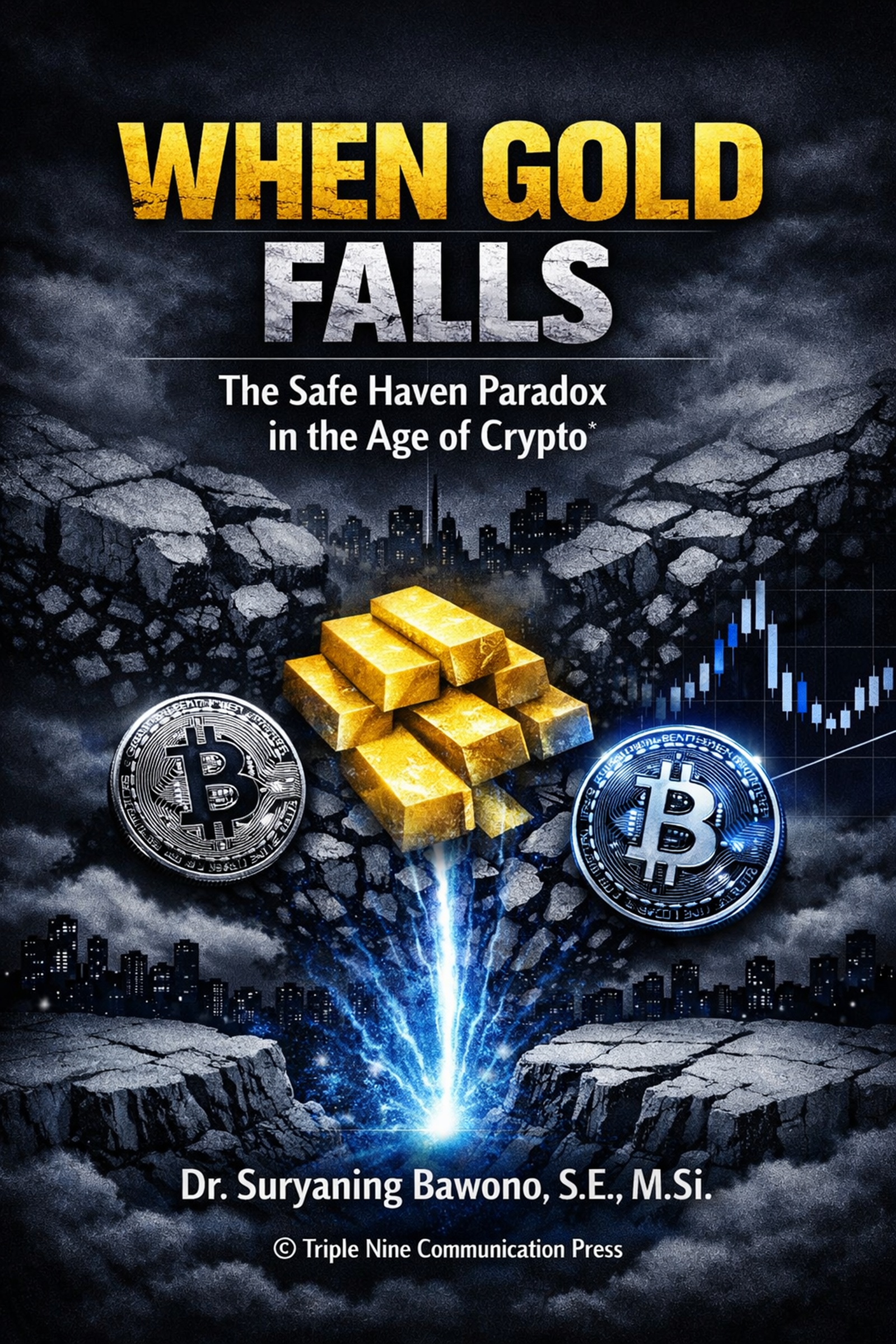
In the end, the safe haven paradox is not only about gold or crypto—it is about how humanity redefines trust and security in an age of constant disruption. As global uncertainty intensifies, the need to understand these shifting foundations becomes more urgent than ever. When Gold Falls: The Safe Haven Paradox in the Age of Crypto offers a deeper exploration of these themes, guiding readers through the complexities of value, risk, and resilience in the modern financial landscape. To engage fully with this conversation and prepare for the future of global finance, secure your copy today on Google Play Books: Get the book here.