

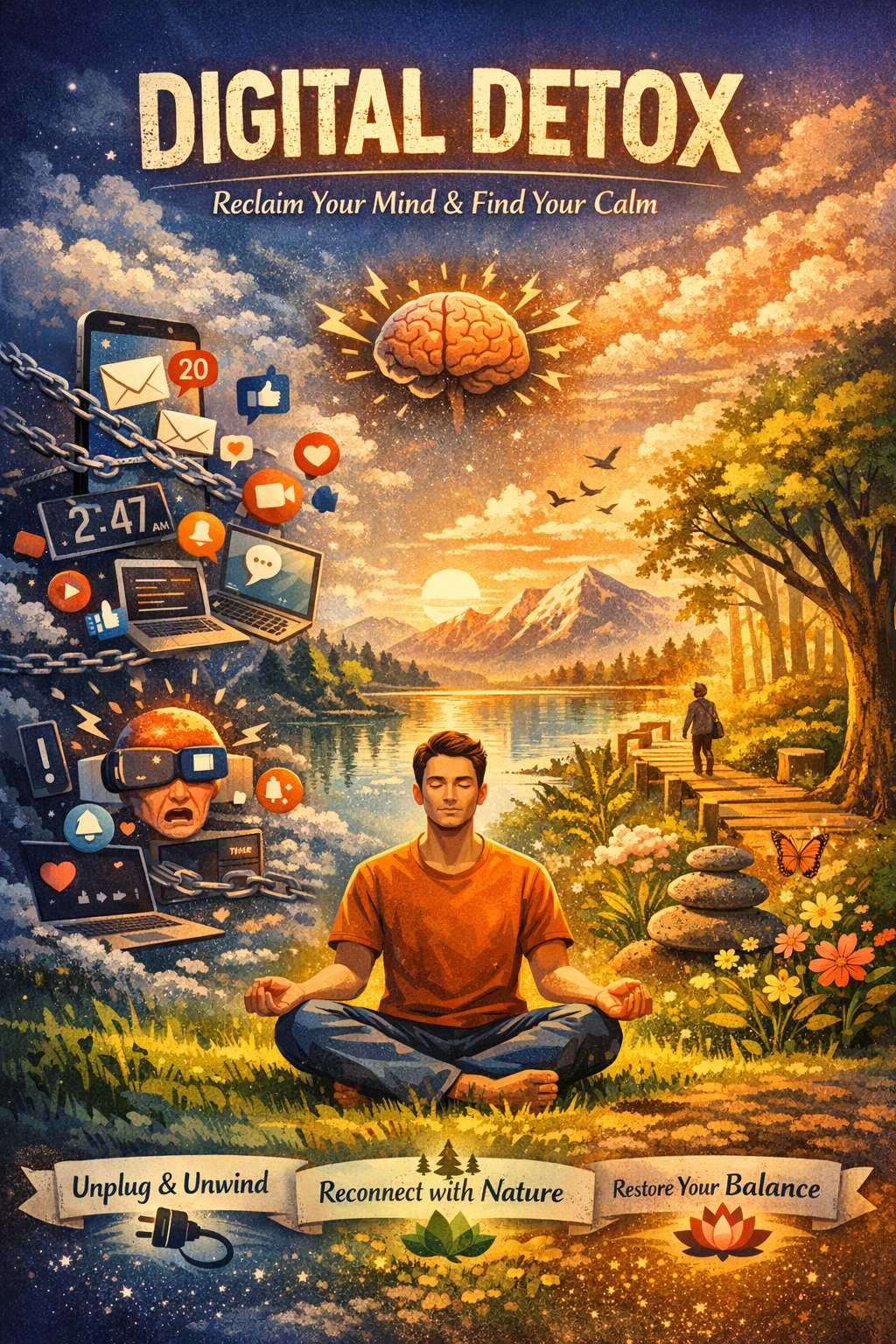
“In a world that never stops buzzing, silence has become the rarest luxury—and the most essential medicine for the human mind.”
Introduction
In 2026, the average person spends over 7 hours a day on digital devices. From endless social media scrolling to constant notifications, our brains are bombarded with stimuli that never seem to stop. While technology has revolutionized communication and productivity, it has also led to a silent epidemic: digital burnout.
As mental health awareness grows globally, more people are turning to digital detox as a way to restore balance, clarity, and emotional well-being. This article explores the science behind digital overstimulation, the benefits of unplugging, and practical strategies for reclaiming your mental space.
The Overstimulated Brain: What’s Really Happening?
In our hyperconnected world, the human brain is constantly bombarded with digital stimuli—from the endless ping of notifications to the addictive scroll of social media feeds. What once felt like convenience has now evolved into a state of perpetual overstimulation, where our minds rarely experience true rest. Neuroscientists warn that this constant flood of information doesn’t just distract us; it rewires our neural pathways, alters our reward systems, and leaves us more vulnerable to stress, anxiety, and fatigue. Understanding what happens inside the overstimulated brain is the first step toward reclaiming mental clarity in the digital age.
Dopamine Overload
Every like, comment, or notification triggers a dopamine release—the brain’s reward chemical. Over time, this creates a loop of compulsive checking and scrolling, similar to addiction.
Cognitive Fatigue
Constant multitasking between apps, emails, and media fragments our attention. Studies show that digital multitasking reduces working memory, impairs decision-making, and increases stress hormones like cortisol.
Emotional Drain
Exposure to curated lives, news cycles, and online conflict can lead to comparison anxiety, doomscrolling, and emotional exhaustion. The result? A generation that feels constantly connected yet deeply disconnected.
Global Trends: Why Digital Detox Is Gaining Momentum
Rise of Mindfulness Apps
Apps like Headspace, Calm, and Insight Timer have seen explosive growth, offering guided meditations and breathing exercises to counter digital stress.
Tech-Free Retreats
From Bali to Iceland, wellness resorts now offer tech-free zones, encouraging guests to disconnect and reconnect with nature and themselves.
Corporate Wellness Programs
Companies like Google and Microsoft are integrating digital wellness policies, including screen breaks, email curfews, and mindfulness workshops.
Social Media Sabbaticals
Influencers and celebrities are publicly taking breaks from platforms, sparking conversations about mental health boundaries in the digital age.
The Benefits of a Digital Detox
| Benefit | Description |
|---|---|
| Improved Sleep | Reduced screen time before bed enhances melatonin production and sleep quality. |
| Enhanced Focus | Unplugging boosts attention span and cognitive performance. |
| Emotional Clarity | Less exposure to online drama leads to better mood regulation. |
| Stronger Relationships | More face-to-face interaction improves empathy and connection. |
| Creativity Boost | Mental space allows for deeper thinking and creative flow. |
How to Start Your Digital Detox
1. Audit Your Screen Time
Use tools like Screen Time (iOS) or Digital Wellbeing (Android) to track your usage. Identify apps that consume the most time and emotional energy.
2. Set Boundaries
- No screens 1 hour before bed
- Designate tech-free zones (e.g., dining table, bedroom)
- Use “Do Not Disturb” mode during focus hours
3. Replace, Don’t Remove
Instead of just removing tech, replace it with nourishing activities:
- Journaling
- Nature walks
- Reading physical books
- Creative hobbies (painting, music, cooking)
4. Try a 24-Hour Unplug
Choose one day a week to go completely offline. Inform close contacts, plan offline activities, and observe how your mind responds.
5. Join a Detox Challenge
Online communities like “Digital Minimalists” offer support, tips, and accountability for those starting their detox journey.
Digital Detox for Families and Children
Children are especially vulnerable to screen addiction. Experts recommend:
- Tech-free family dinners
- Outdoor playtime over screen time
- Parental controls and screen limits
- Modeling healthy tech habits as adults
Creating a culture of mindful tech use at home fosters emotional intelligence and stronger family bonds.
The Role of Technology in Detoxing from Technology
Ironically, some of the best tools for digital detox are digital:
- Forest App: Grow a virtual tree by staying off your phone
- Freedom: Block distracting websites and apps
- One Sec: Adds a delay before opening addictive apps, encouraging reflection
- Offline Mode: Many phones now offer customizable offline profiles
These tools help users build intentional tech habits rather than reactive ones.
Real Stories: What People Are Saying
“After my 3-day digital detox, I felt like I could breathe again. My anxiety dropped, and I actually enjoyed silence for the first time in years.” — Maria, 29, Spain
“We started tech-free Sundays at home. My kids are more present, and we’ve rediscovered board games and storytelling.” — James, 42, Canada
These testimonials reflect a growing desire for authentic connection and mental clarity in a hyperconnected world.
The Future of Digital Wellness
Expect to see:
- AI-driven screen time coaching
- Wearables that monitor digital stress
- Government policies on tech use in schools and workplaces
- Integration of digital detox into mainstream healthcare
As awareness grows, digital wellness will become a core pillar of holistic health, alongside nutrition, exercise, and sleep.
Conclusion
Digital detox is not about rejecting technology—it’s about reclaiming control over how we use it. In a world of constant stimulation, choosing to unplug is a radical act of self-care. Whether it’s a weekend offline or a daily screen break, every moment of intentional disconnection brings us closer to mental clarity, emotional balance, and genuine human connection.
As the global conversation around mental health deepens, digital detox will continue to rise—not as a trend, but as a necessity.